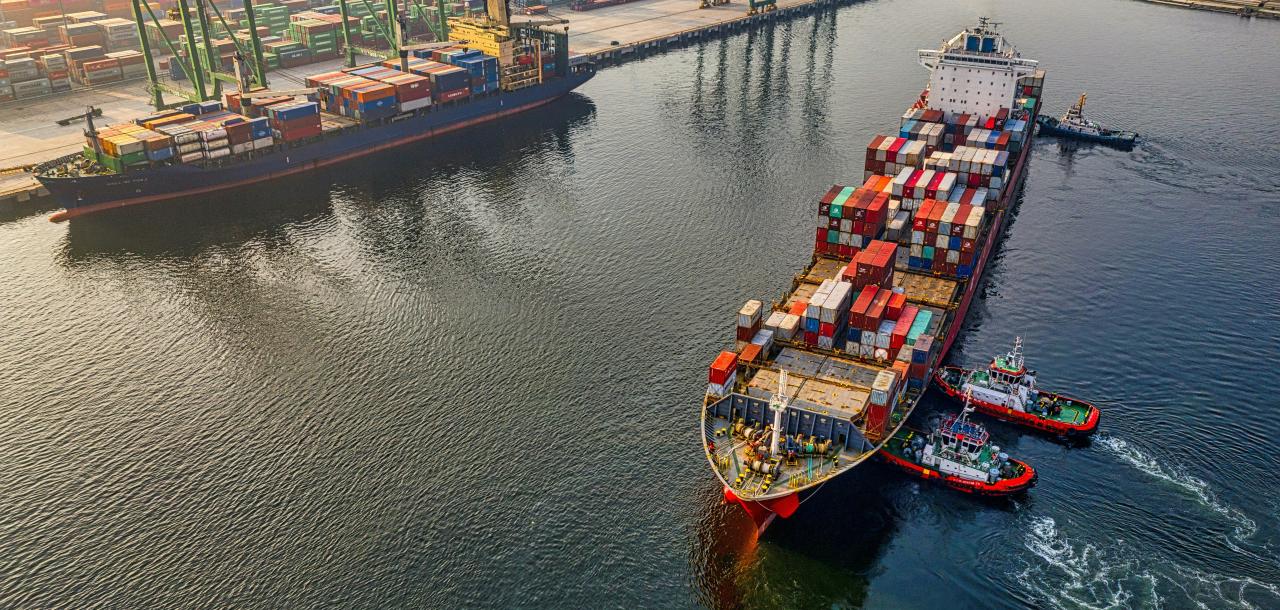


The Environmental Markets Lab (emLab) is a team of scientists based at the University of California Santa Barbara that advances economic research to deliver practical solutions for people and the planet. In collaboration with implementing partners, we design, test, and implement scalable solutions that work across boundaries—connecting science with policy, data with decisions, and ambition with action—to create pathways toward a future where environmental and human well being mutually reinforce one another.
Our Programs
Leveraging our diverse expertise, we generate timely insights into effective and equitable solutions for Climate & Energy, Land & Freshwater, Ocean & Fisheries, and People & Poverty.
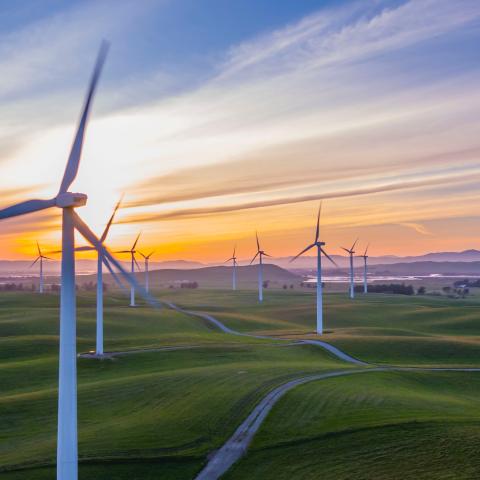
Climate & Energy
Advancing effective and equitable climate solutions
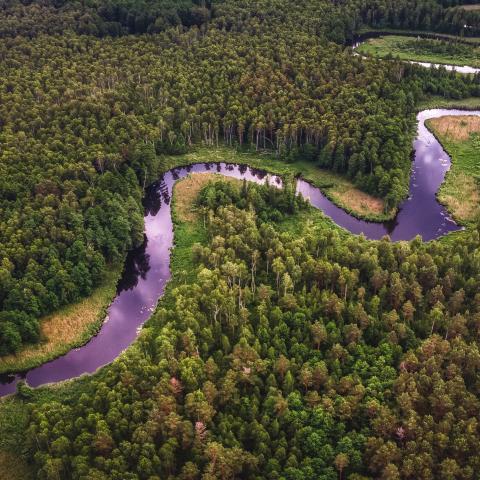
Land & Freshwater
Balancing multiple ecosystem services from the land
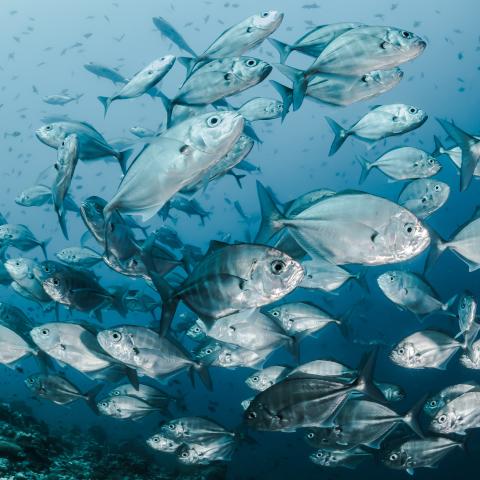
Ocean & Fisheries
Improving prosperity and sustainability of the ocean
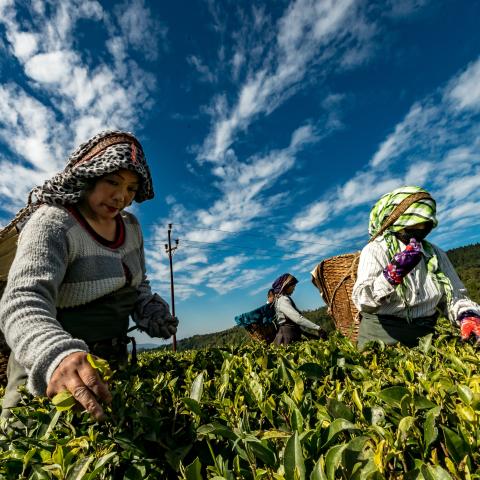
People & Poverty
Strengthening the resilience of vulnerable communities and natural systems
emLab Blog: Our 2 Cents


Publications

The ability to meet global biodiversity and climate targets hinges on how we allocate land across competing sectors. Yet, traditional planning evaluates conservation, agriculture, and energy in isolation, assuming their expansion won't critically intersect. We find that intentional, cross-sector coordination can dramatically minimize these land-use conflicts while safeguarding high-priority natural assets.
Why didn't I get a payout? Understanding farmer choices, index insurance, and basis risk
Blakeley et al. 2026, Applied Economic Perspectives and Policy
Exploring pathways to the persistence of community engagement in co-management across social-ecological conditions
Riveria-Hechem et al. 2026, Conservation Letters
Zero-shot inference strategies for smallholder (<0.1 ha) agriculture field delineation with the Segment Anything foundation model
Tripathy et al. 2026, Science of Remote Sensing
Factors shaping the siting of utility-scale solar and wind projects in the United States
Wu et al. 2026, Environmental Research Letters