About
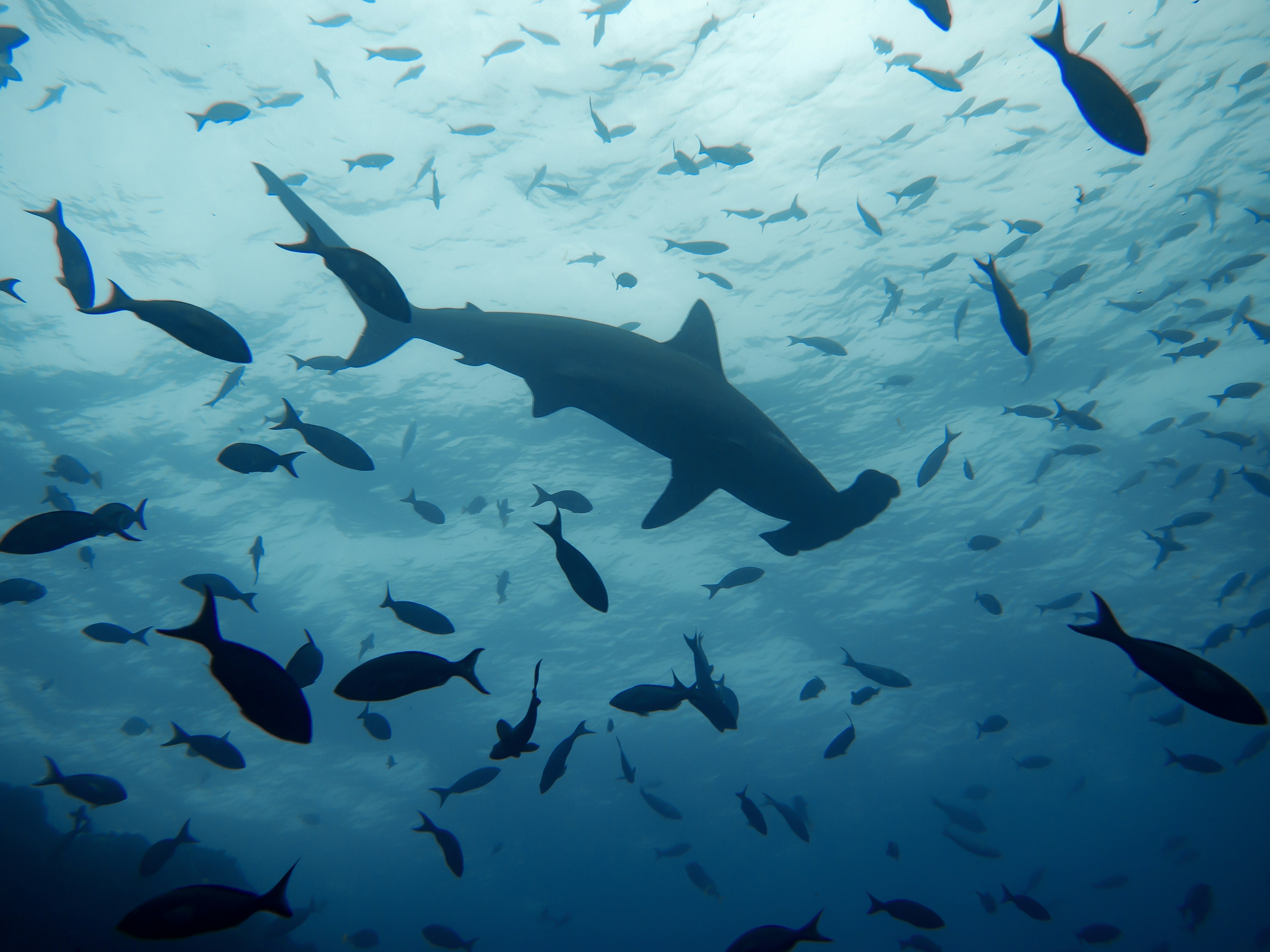
Fisheries bycatch—the unintended capture of non-target species—remains a major challenge for marine conservation and sustainable tuna fisheries in the eastern tropical Pacific Ocean. Industrial tuna fleets in the region frequently interact with vulnerable marine megafauna such as sharks, rays, and sea turtles, creating ecological risks while also imposing economic costs on fishers.
Given both the ecological significance and vulnerability of these species and the economic importance of these fisheries, managers and fishers are in search of strategies for mitigating bycatch while also sustaining profitable fisheries, now, and in the future. We are tackling this issue using a two-pronged approach.
Approach
To start, we are developing a dynamic ocean management decision support tool to minimize bycatch in near-real time. Static spatial closures, a form of bycatch mitigation, are often too rigid to keep up with highly mobile species and changing ocean conditions. Therefore, we need a dynamic tool that changes as the conditions change. We are building a joint dynamic species distribution model to model the distributions of not only bycatch species, but also target species. Unlike traditional species distribution models, joint dynamic species distribution models explicitly account for species interactions, co-occurrence patterns, and shared environmental responses, offering a more ecologically realistic representation of species distributions. Furthermore, including both the target species and multiple bycatch species will allow us to identify areas where the potential for target catch is high while the potential for multiple bycatch species catch is low.
The second component of our project is focused on long-term management of these species. Climate change is fundamentally altering ocean temperatures, currents, and productivity critical to these species’ well-being and increasing threats to their survival. We will utilize our joint dynamic species distribution model to assess shifts in bycatch risk through the end of the century under different climate change scenarios. We will be able to see how these patterns in species distributions might change, or stay the same, over time. Understanding how shifting ocean conditions influence species dynamics will help managers anticipate future bycatch risks, ultimately informing more adaptive and proactive fisheries management strategies.
Team
Steve Gaines (Principal Investigator), Jennifer Bone (Project Manager), and Kinsey Matthews (Graduate Student Researcher)
Partners
This project is in collaboration with Conservation International (CI) as part of the Arnhold UC Santa Barbara-Conservation International Climate Solutions Collaborative. UCSB and CI launched this initiative through generous support from John Arnold (UCSB '75) to unify their demonstrated expertise and networks to conduct cutting-edge applied research to yield tangible, progressive solutions and propel the careers of emerging environmental professionals.