
Reflecting on the year always brings a deep sense of gratitude. Zoom calls across time zones, sticky-note brainstorming sessions, happy hours on the Bren Deck, office polls, celebratory donuts, thank you notes, and even impromptu lunch surf sessions at Campus Point—these are just a few of the moments that bring emLab to life on any given day. Together, these moments have added up to something special. Over the past year, our team worked across 25 applied projects, producing 28 publications and appearing in 64 media mentions. More than ever before, we are finding innovative ways to bring economic ideas to life as practical environmental solutions. In addition to our staff of more than 35, this work was made possible by the contributions of 47 students, five postdoctoral researchers, and seven visiting scholars. These efforts reflect the team-based approach that continues to shape the impact and direction of our work. At a moment when the stakes for the planet have never been higher, we’re proud of the people-centered engine we developed that keeps us moving forward together.
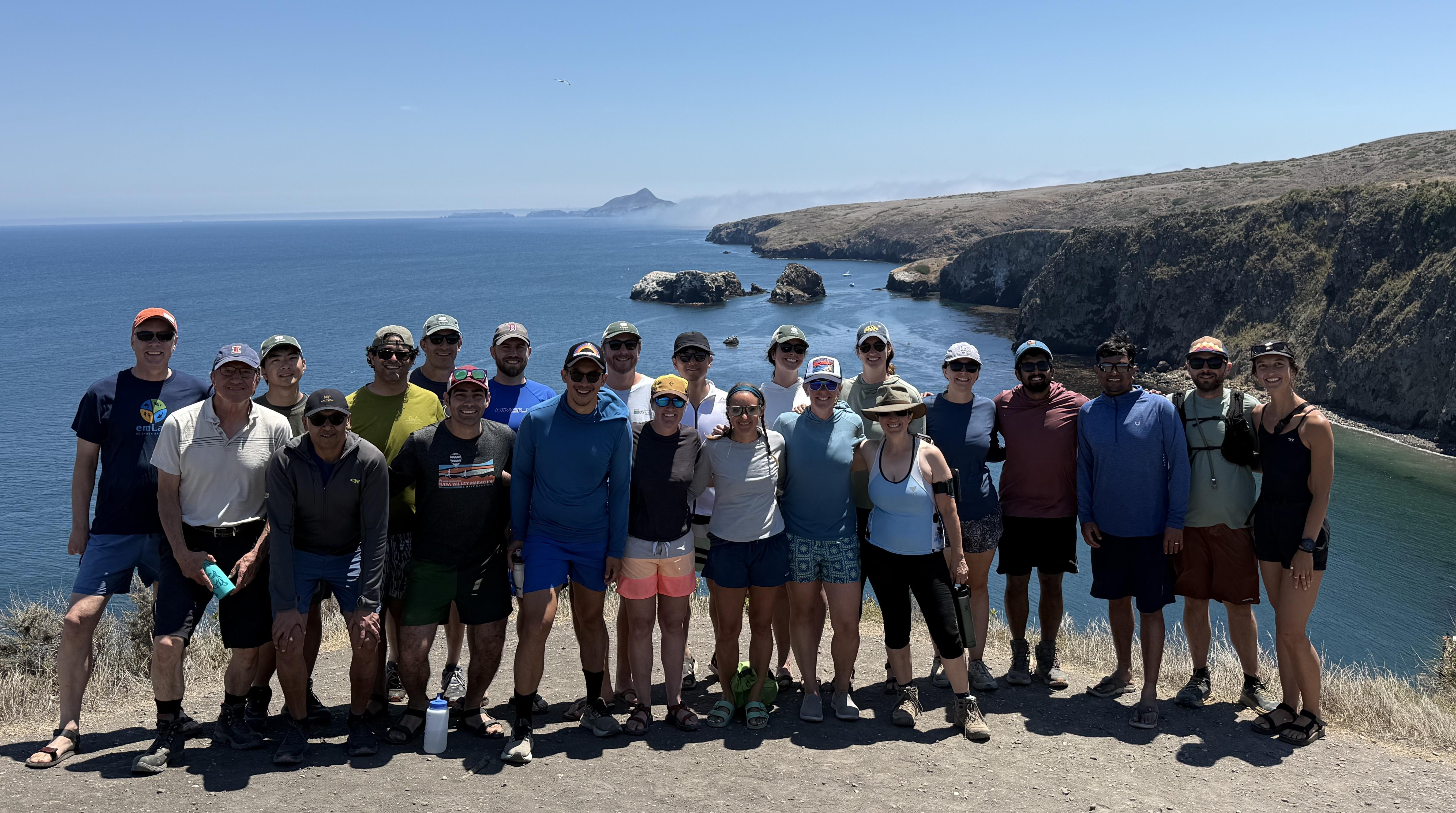
Team photo from our staff and PI retreat earlier this year.
Research Splash

Quantifying the global climate feedback from energy-based adaptation
As climate change intensifies, people adapt—often by using more energy to cope with heat and cold. This raises concerns that climate adaptation could increase emissions. In our Nature Communications study, we quantified the global climate feedback from energy-based adaptation across 142 countries and found that reduced demand for heating more than offset increased cooling demand. In other words, energy use changes linked to adaptation actually slightly slowed future warming rather than accelerating it.
Using California’s Cap-And-Trade revenue to lower electricity prices
As California’s cap-and-trade program approached reauthorization, rising electricity prices were a growing concern for households and policymakers. We examined whether cap-and-trade revenues could be used to lower residential electricity prices and found that reallocating these revenues could meaningfully reduce household electricity bills. The findings helped inform policy discussions ahead of the program’s renewal, showing that cap-and-trade could support both emissions reductions and electricity affordability.
Featured tool: We developed an interactive calculator that estimates how reallocating California’s cap-and-trade revenues could affect residential electricity prices. Check it out here.

Fiji fisheries characterization report
In collaboration with the Government of Fiji, Blue Prosperity Fiji, and the Waitt Institute, our team supported the release of Fiji’s first Fisheries Characterization Report. Fisheries are central to Fiji’s economy, food systems, and livelihoods, and this report provides the country’s first comprehensive assessment of offshore and inshore fisheries, aquaculture, and marine conservation efforts.
Little-to-no industrial fishing occurs in fully and highly protected marine areas
In collaboration with Global Fishing Watch and National Geographic Pristine Seas, we conducted the first global, data-driven assessment of industrial fishing inside the world’s most strongly protected marine areas. Using satellite data, AI, and radar to overcome monitoring blind spots, our study found that industrial fishing was virtually absent in most cases, challenging the claim that MPAs are merely “paper parks.” This work was featured on the front cover of Science and covered by numerous media outlets, including The Conversation and NPR.
Dataset spotlight: Student researchers developed a global, open-source dataset tracking when marine protected areas are proposed and implemented. Explore it here.
Uneven participation of independent and contract smallholders in certified palm oil mill markets in Indonesia
Sustainability standards can improve supply chains, but they may also affect who gets access to higher-value markets. In this study, our team examined smallholder participation in sustainably certified palm oil mills in Indonesia. We found that contract smallholders were more common in certified supply, while independent smallholders—who produce a substantial share of palm oil—were underrepresented. This work raises important questions about how sustainability programs can better include small-scale farmers.
New estimates of the costs of managing forests to increase carbon storage
In research published in Climate Change Economics, our team developed new estimates of the costs of increasing carbon storage through improved forest management in Western Oregon and Washington. We found that extending timber harvest rotations, especially when paired with commercial thinning, can substantially increase carbon sequestration at a lower cost, highlighting how improved forest management can serve as a scalable, cost-effective natural climate solution. Read our blog here to learn more.
Recognizing excellence: Andrew Plantinga received the highest honor in environmental and resource economics at the 2025 AERE Summer Conference. Read the press release here.
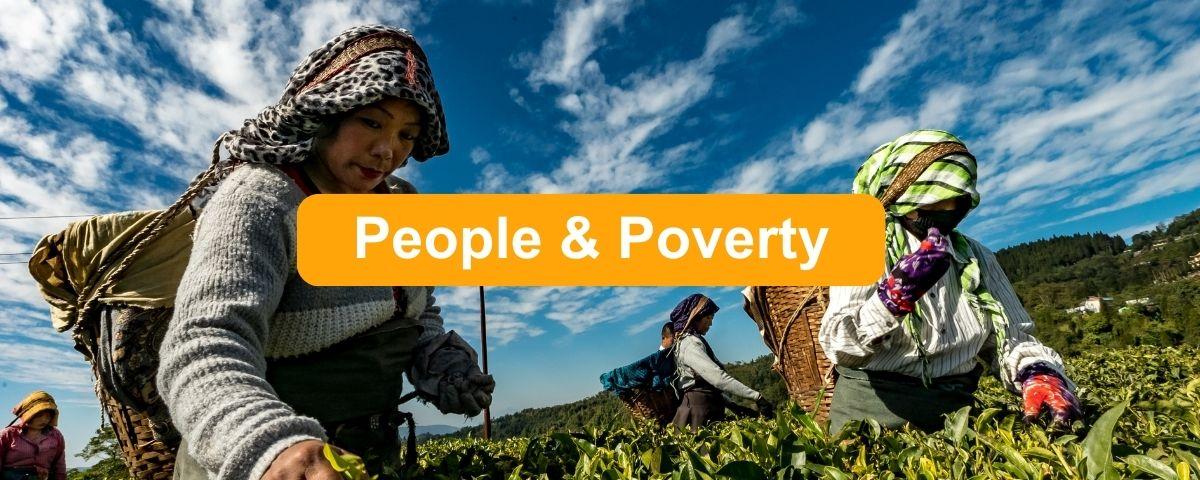
Official estimates of global food insecurity undercount acute hunger
Understanding global food insecurity is critical for responding to hunger crises, so our team evaluated whether widely used global food insecurity estimates capture the full scale of need. By analyzing nearly 10,000 food security assessments across 33 countries, we found that current measures may systematically underestimate hunger, suggesting that nearly one in five facing severe food insecurity may go uncounted. Read the press release here.
Five lessons for closing the last mile: How to make climate decision support actionable
Even as climate forecasts improve, many farmers, ranchers, and aid providers struggle to use them in practice. Our team examined why climate information often fails to translate into action, drawing on more than 40 interviews in Kenya and the U.S. We identify five lessons for making climate decision support more actionable, emphasizing co-production, accessibility, and realistic decision-making under uncertainty.
Evidence in Action
We believe good policy starts with objective evidence, but our commitment to partnerships is what drives success. We listen to what is needed to move the needle on key policy issues and develop systems and tools that enable new solutions to emerge.
- By exploring how markets can make energy costs more affordable, our team was on the front-lines developing research that provided key economic insights into California’s Cap-and-Trade program. In recognition of this work, emLab was highlighted in the Governor’s press release, and Kyle Meng was invited to the bill-signing ceremony in San Francisco that reauthorized the program.
- As part of our efforts to cultivate data science capacity in Africa, we hosted a training at UC Santa Barbara where researchers from Togo learned how to use MOSAIKS to generate rapid, actionable insights. These researchers are now helping lead the successful launch of a national Data Lab which aims to integrate data science tools directly into government decision-making.
- With Global Fishing Watch and Climate TRACE, we developed a first-of-its-kind pollution emissions database for more than 925,000 industrial vessels, providing port- and voyage-level insights that reveal where, when, and how much these vessels are emitting in near-real-time. Beyond opening new avenues for research, this work holds enormous potential to inform global maritime policy, as highlighted by Al Gore at the UN Climate Change Conference (COP30). It has already been leveraged by a team of Master of Environmental Data Science students at the Bren School of Environmental Science & Management to provide precise insights into the emissions associated with global fisheries. Learn more here.
Notable events: Alongside our almost-annual Occasional Workshop (summary here), we hosted eight research roundtables, four Environmental Resource Economics seminars, and seven study clubs at UC Santa Barbara. Our team also participated in nearly a dozen conferences, including Climate Week NYC, and completed fourteen professional development trainings. Across our projects, we planned and/or attended nearly forty convenings, workshops, and meetings, with our Empowering India’s Clean Energy Transition project standing out for exemplifying our collaborative approach to engaging partners and policymakers. Ranjit Deshmukh recently traveled to India to share key findings from our work developing Gridpath-India, which we believe offers the highest spatial and temporal resolution electricity modeling available for grid planning and operations in India, enabling highly realistic simulations of the power system in 2030, 2040, and 2050.
Teamwork Makes the Dream Work
This year was shaped by the people who make our team such a special place to work. As Christopher Costello stepped into a two-year dual appointment as both our Research Director and EDF’s Chief Economist, and Kyle Meng took on the Climate & Energy Director role, we leaned into new perspectives and a shared commitment to learning, celebrating both successes and missteps along the way. From sharing big ideas at our annual staff campout to quick puzzle “brain breaks,” our team is core to not just what we do, but how we do it.
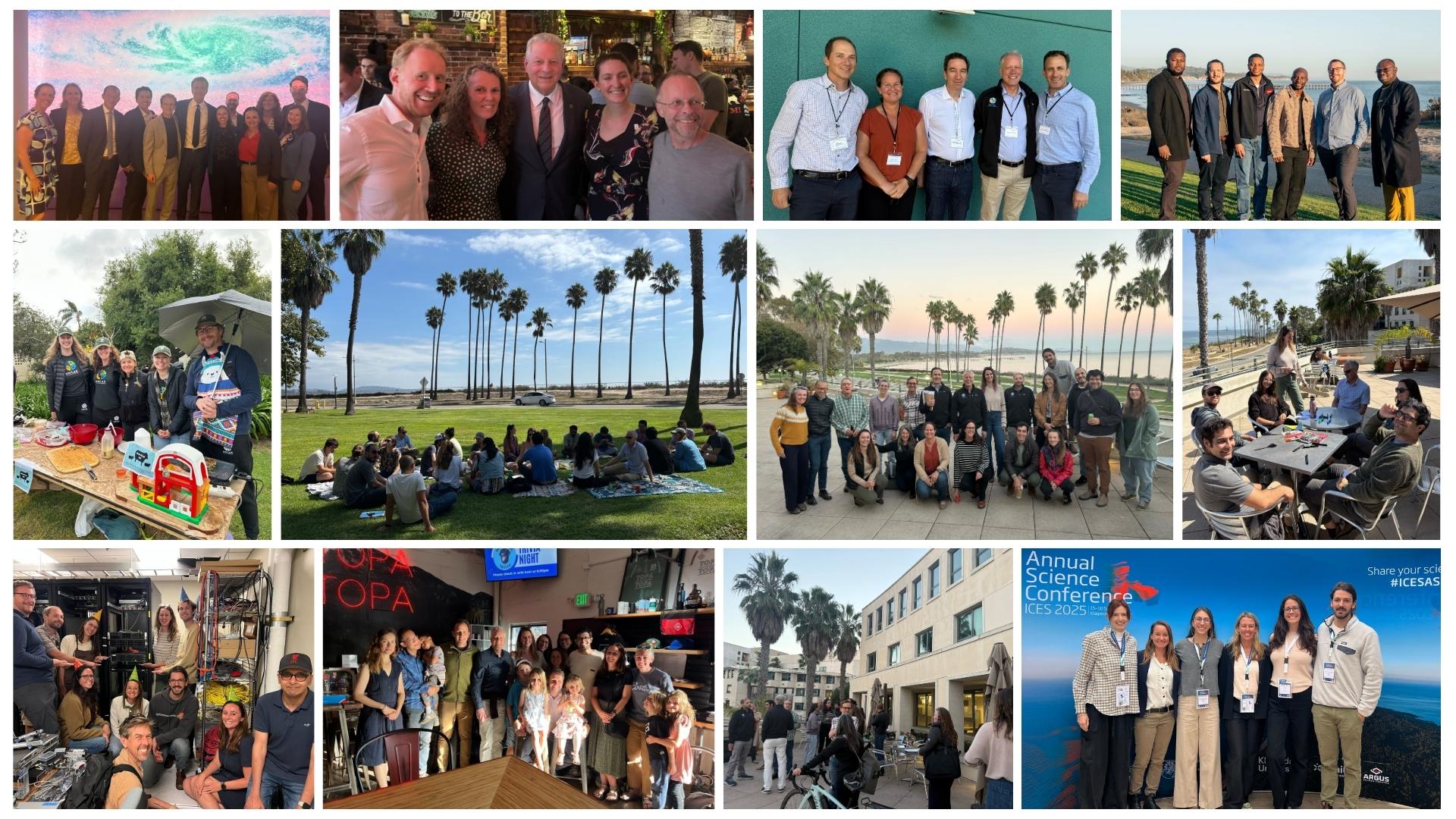
A few highlights from our team over the past year.
Looking Toward 2026
As we wrap up 2025, we want to say thank you to everyone who has been part of this journey. We look forward to what we'll accomplish together in the year ahead!